These photos were taken years ago and are being revisited here as a retrospective. What follows is an AI's interpretation of the images and what it imagines about the life behind them. The real story comes after — jump to it.
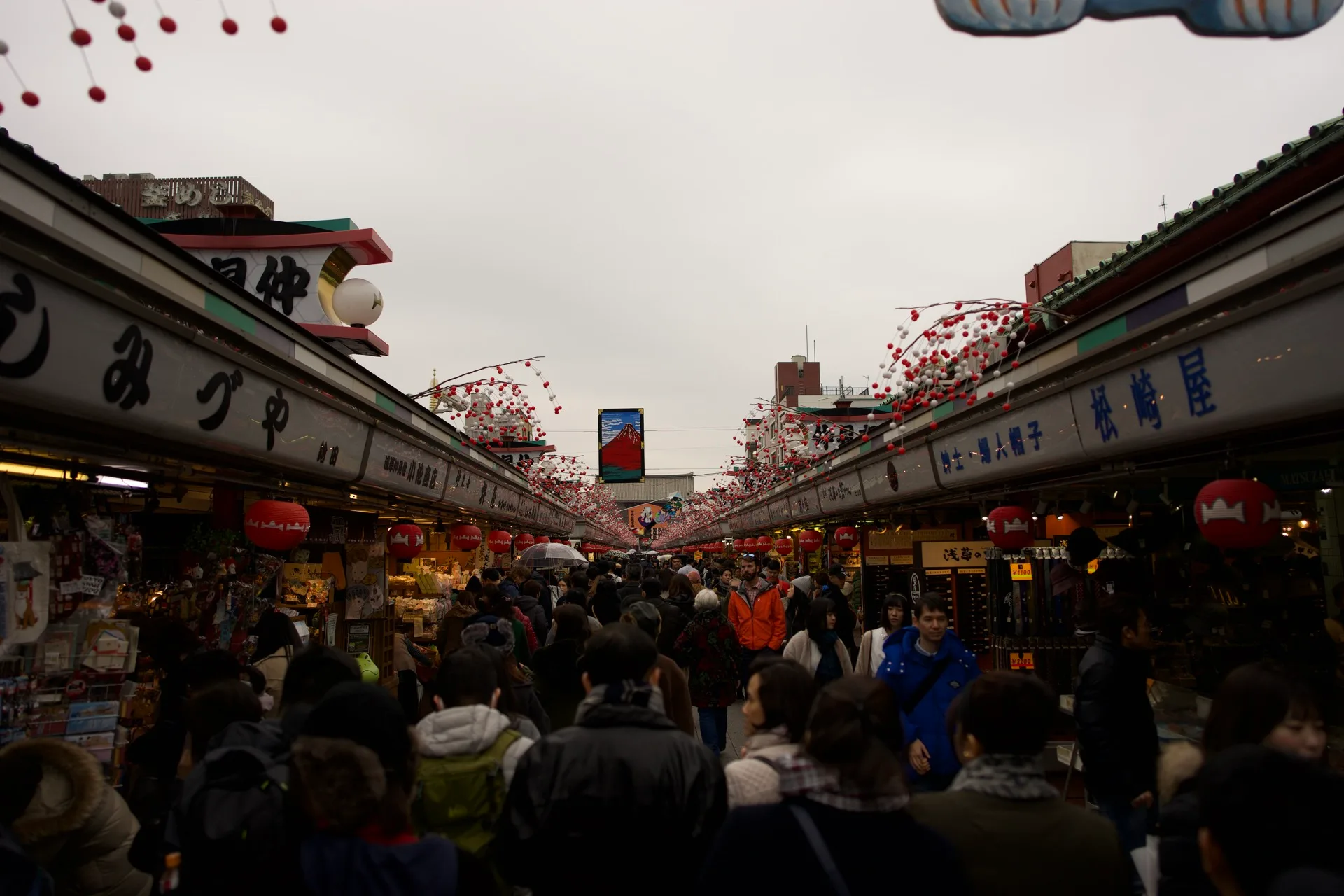
The trip starts in a crowd. Nakamise-dori, the long shopping corridor that leads to Sensoji in Asakusa, shoulder to shoulder the way it always is in December. That's the hero image up top. The photographer didn't wait for a gap in the foot traffic. There is no gap. There never has been.
From there the trip covers a lot of ground — Tokyo to Yokohama, then north to Hokkaido, then back south to Nara — all on the same Sony, all in about two weeks. Every frame in this set was shot between December 22nd and January 5th. The last days of 2019 and the first days of 2020, though nobody was counting it that way yet.
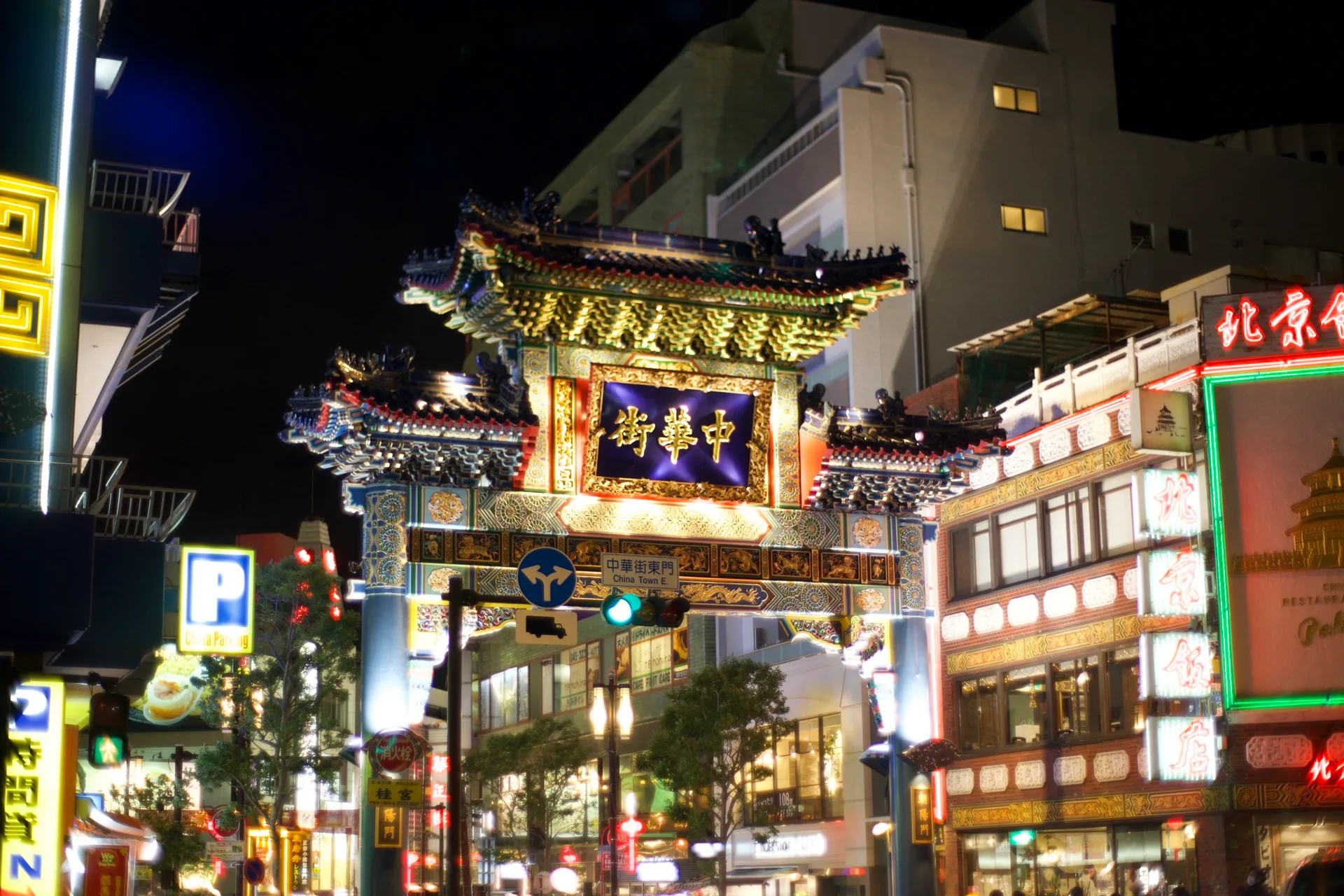
Christmas Eve in Yokohama. In Japan that's a date night, not a family holiday. The Chinatown gate — 中華街 in gilded characters — is lit up against the December dark, and the neon from the restaurants behind it bleeds green and pink and red into the frame. Yokohama Chinatown is the kind of place where the food is both Chinese and Japanese and not quite either, served fast and eaten standing up if you want. It's a good place to be on a night when the whole country is out walking around for no particular reason.
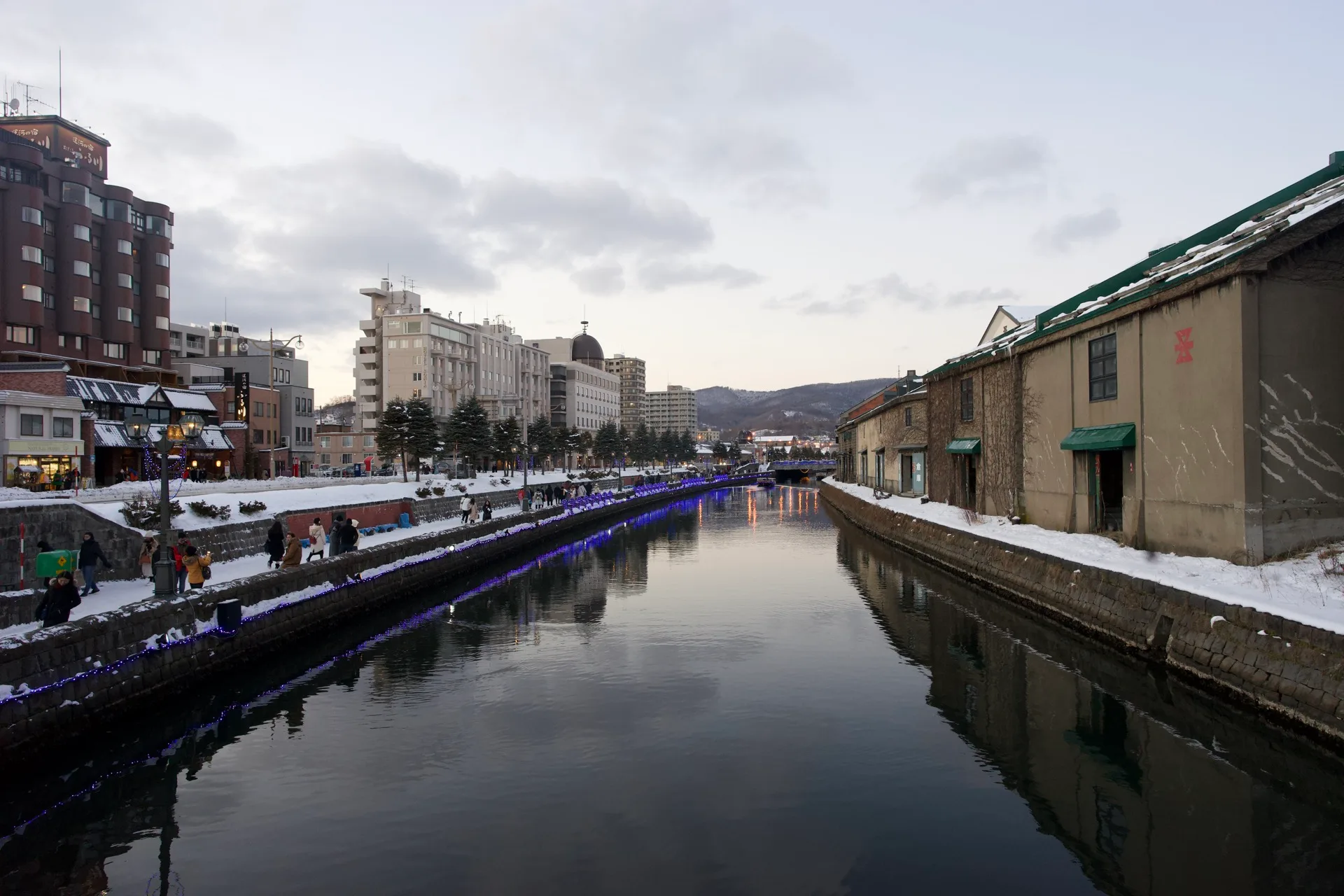
Then, suddenly, Hokkaido. The Otaru Canal with snow on the walkways and blue lights strung along the water. The old warehouses on the right bank were built for herring money. Now they sell glass and music boxes to tourists, but in late December the buses have gone home and the canal gets quiet enough to reflect the lights without a ripple. Otaru is a port town that knows it used to matter more than it does now. In winter, when everything slows down, that knowledge sits closer to the surface.
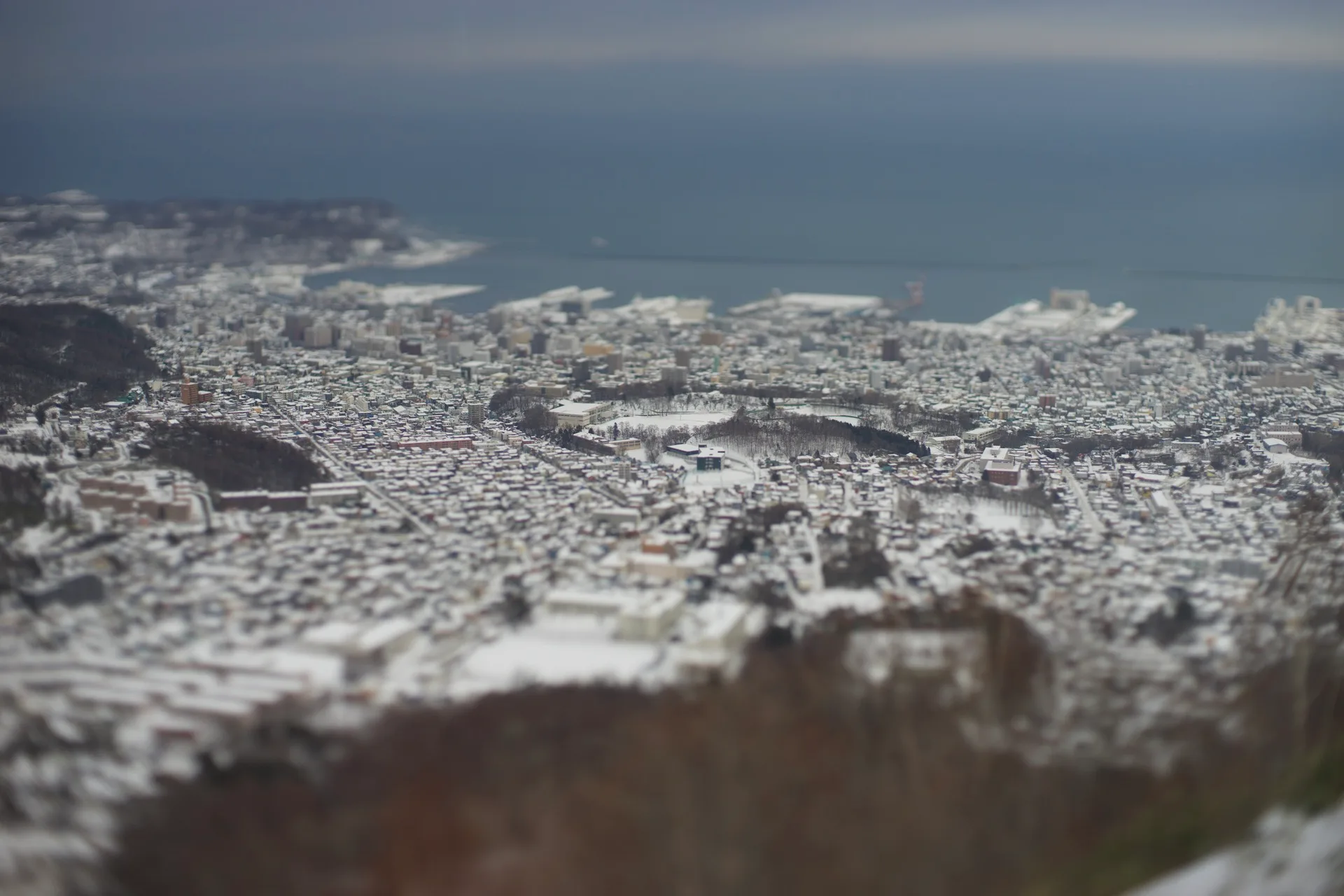
From the top of Tengu-yama, the ropeway view. The whole town fits in the frame — every snow-covered roof, the port, the sea beyond it, all soft at the edges from the shallow depth of field. It looks like a model. The kind of place someone built on a table and lit from the side. Seeing a town from above does something to scale. Streets that felt wide from the ground are thin lines. The mountain that seemed far off is right here. Everything fits.
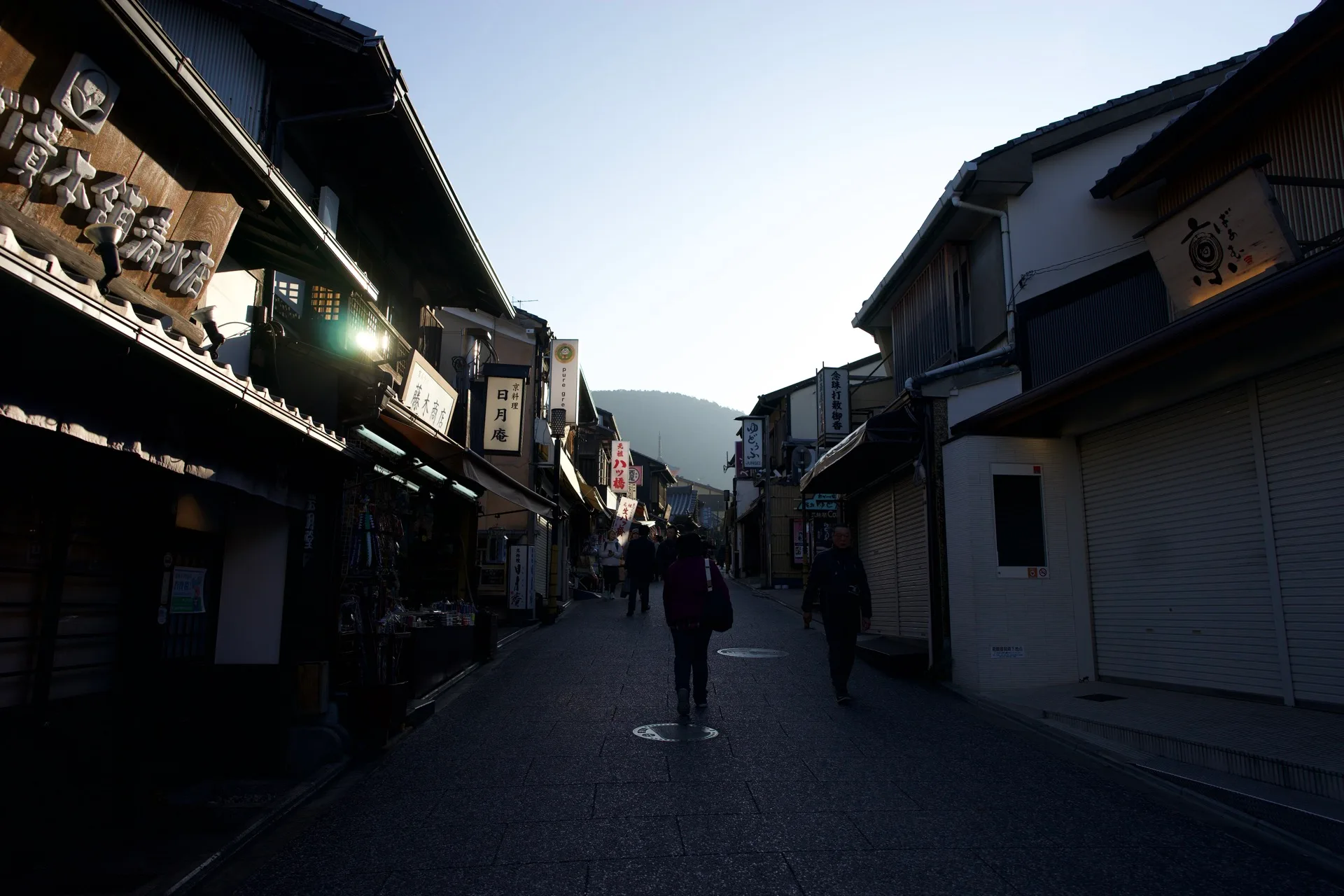
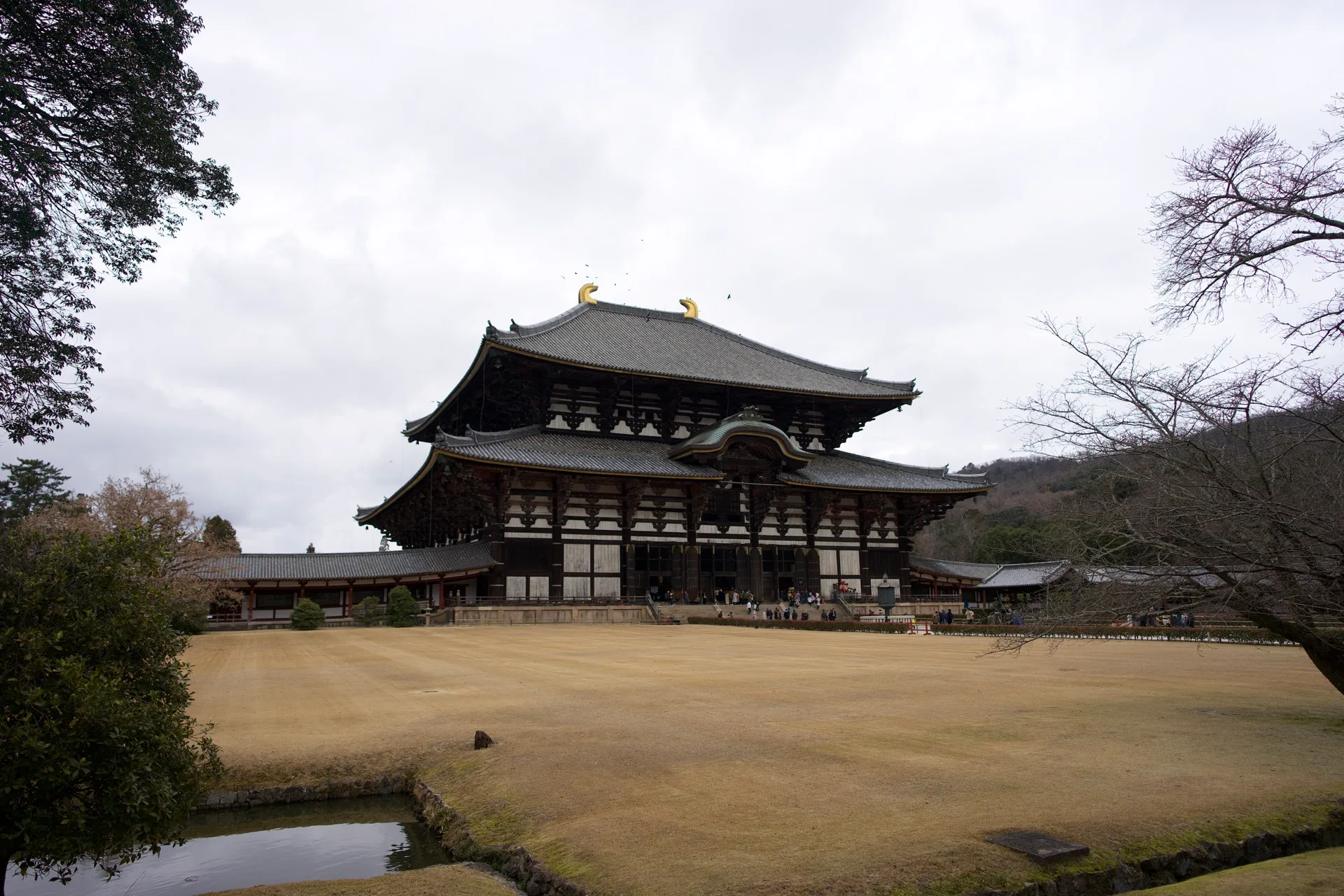
January. The trip has swung south, to Kansai. A temple approach at dusk — wooden storefronts, cloth banners, a sign reading 日月庵 — and then the trip's final frame: Todai-ji in Nara, the Daibutsuden, the largest wooden structure in the world. The grass has gone brown. The trees are bare. A few visitors stand at the entrance, barely visible against the scale of the thing. The golden finials on the roofline catch what's left of the afternoon.
Nara in winter is one of the few times the temples get to feel as large as they actually are. The deer are still wandering around, but the crowds have thinned, and it's possible to stand in front of this building and just look at it without someone's selfie stick in the frame.
Two weeks. Four cities. Every shot on the same camera. And then home, wherever home was, in the first week of a year that would make a trip like this impossible for a long time. Nobody standing in front of Todai-ji on January 5th was thinking about that. They were just cold, and probably ready for dinner.
What Actually Happened
We were on our honeymoon. Went to Japan for a month. The whole trip was to see the country, visit family, and to have fun. I long for the days of freedom.
Go anywhere. Eat anything. Read a book quietly. Walk around town late at night without a thought or consequence of what’s next!
That’s really it you know.
What was wild was that this was right before COVID became a thing. I think this trip and these images mark a time before our perception of the world changed. While we’re technically back to those days in many ways, the world has changed so much since. I carry masks when I travel. A lot of us have hand sanitizer with us.
In some ways, the world seemingly peaked sometime in the late 90s/early 2000s so what do I know 🤷
Oh, and if you have food, those deer (while polite in approach) are aggressive and will follow you until you have nothing left. (Especially if you have anything besides the designated biscuits they have gotten tired of eating)